

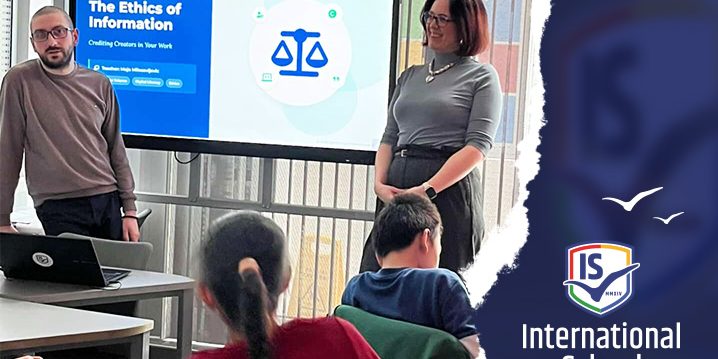
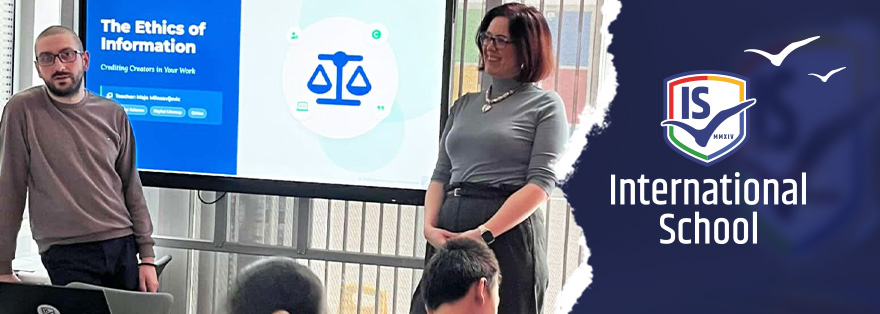
Year 7 students recently participated in an engaging interdisciplinary lesson led by Computer Science teacher Maja Milosavljević and Digital Literacy teacher Marko Nikolić. Titled The Ethics of Information: Crediting Creators in Your Work, the session connected core concepts from both subjects, helping students better understand ethical responsibility in today’s digital world.
A Familiar Sound, A Powerful Question
To spark discussion, students listened to two iconic songs – Ice Ice Baby by Vanilla Ice and Under Pressure by Queen and David Bowie.
It did not take long for them to recognise that the basslines were strikingly similar. This discovery immediately led to a lively classroom debate. Had one artist borrowed from the other? Where is the line between inspiration and copying? From this musical comparison, the discussion naturally evolved into broader questions of plagiarism, originality, and intellectual ownership.
Understanding Plagiarism in the Digital Age
Using this example as a starting point, students explored different forms of plagiarism and the importance of giving proper credit to original creators. They examined why attribution matters – not only in academic work but also in digital spaces where copying and sharing content is effortless and widespread.
Through practical scenarios and guided discussion, students reflected on how ethical principles apply to everyday online behaviour – from school assignments to social media posts and digital projects.
Early Awareness, Lasting Responsibility
Although Computer Science formally begins in the first year of upper secondary education, the lesson content was carefully adapted to suit the knowledge and maturity of Year 7 students. By connecting theory with relatable examples, the session fostered early awareness of academic honesty, digital responsibility, and respect for intellectual property.
The Value of Interdisciplinary Learning
This lesson highlighted how interdisciplinary teaching can make complex ideas accessible and meaningful. By bridging Computer Science and Digital Literacy, students were encouraged not only to understand information – but to question it, use it responsibly, and create with integrity.