

Is hard work still the key to success, or is prioritising personal happiness and quality of life a more rational choice in a world facing growing economic and social challenges? This thought-provoking question was at the heart of the first international online debate bringing together International School students and their peers from Hong Kong.
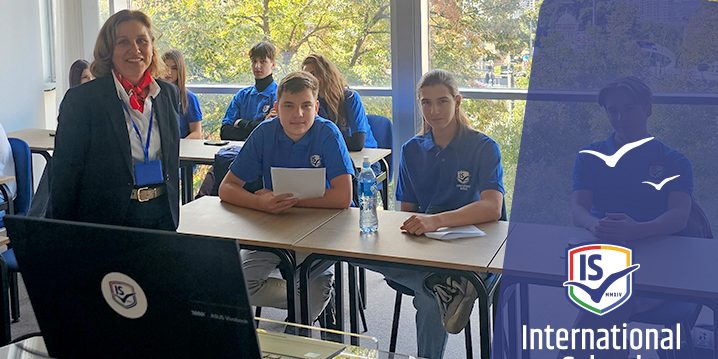
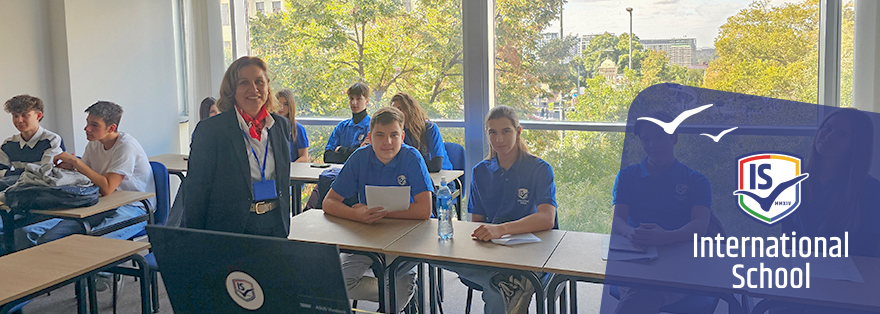
On 23 September, International School students took part in an international debate with students from CK High in Hong Kong, exchanging views on one of the most pressing questions facing modern society: what kind of future awaits young people, and to what extent does their success truly depend on individual effort?
The debate was conducted in English via Microsoft Teams and organised by Marija Milić, Economics and Business teacher. The event marked an important step in strengthening international cooperation and creating opportunities for meaningful discussions that extend beyond the boundaries of classrooms, countries and cultures.
 Hard Work or Personal Happiness: Which Is the More Rational Choice for the Next Generation?
The debate centred on the concept of “lying flat”, a social trend that originated in China and challenges traditional expectations surrounding success, career progression and the constant pursuit of professional achievement.
Exploring the question “Given the challenges young people face today, is ‘lying flat’ and prioritising personal happiness over hard work an increasingly rational decision?”, students examined arguments from a range of economic, social and cultural perspectives.
Eight Year 12 Economics students were divided into two teams. One team argued that perseverance, dedication and hard work remain essential foundations for long-term success, while the other questioned whether this approach is still justified in a world where effort does not always guarantee the desired results.
Through well-reasoned arguments and thoughtful discussion, students demonstrated their ability to examine complex social issues from different perspectives, think critically and defend their views confidently in English.
Artificial Intelligence, Unemployment and the Future of Work Take Centre Stage
The debate raised a number of important questions that are likely to shape the professional and personal lives of today’s younger generations.
Particular attention was given to the impact of artificial intelligence on the labour market, youth unemployment, social mobility, the value of education and changing perceptions of career success.
Students also explored whether young people have equal opportunities to progress, whether education and hard work still offer a reliable path towards financial security, and how technological developments are reshaping expectations for the future.
One of the most engaging aspects of the discussion was the comparison between Asian cultural values and the principles of Western capitalism, allowing participants to gain a deeper understanding of how different societies approach work, achievement and personal fulfilment.
The exchange between students from Serbia and Hong Kong highlighted the importance of international dialogue in understanding global challenges, while also demonstrating how similar the concerns of young people can be, regardless of geographical distance.
Learning That Connects Knowledge, Critical Thinking and International Experience
Alongside the students actively participating in the debate, the event was attended by their schoolmates, as well as Gorana Janeš, English teacher, and Yao Yuning, a Year 11-1 student.
For International School students, this was an opportunity to apply knowledge acquired in Economics lessons to real-world social and economic issues, while further developing their public speaking, debating, active listening and intercultural communication skills.
International debates such as this form a valuable part of the educational experience, encouraging students to develop independent opinions, challenge established assumptions and appreciate perspectives from different parts of the world.
This first international debate with a school in Hong Kong once again demonstrated that modern education goes far beyond acquiring knowledge. It is equally about developing the ability to apply that knowledge to understand an ever-changing world.