

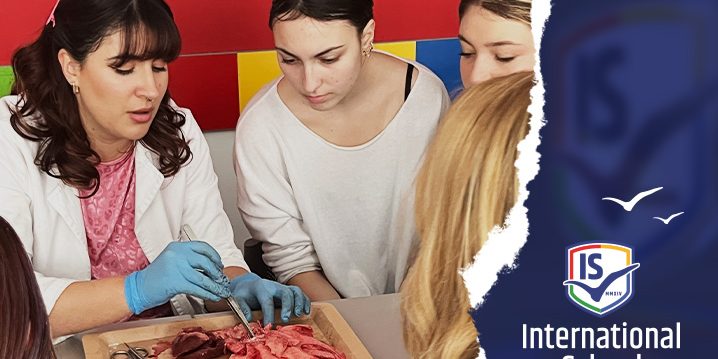
During a recent Biology lesson, Year 12 students took part in a highly practical exploration of anatomy under the guidance of their teacher, Nadežda Šućur. The lesson was designed to help students understand different approaches to studying anatomy by combining medical imaging with hands-on investigation.
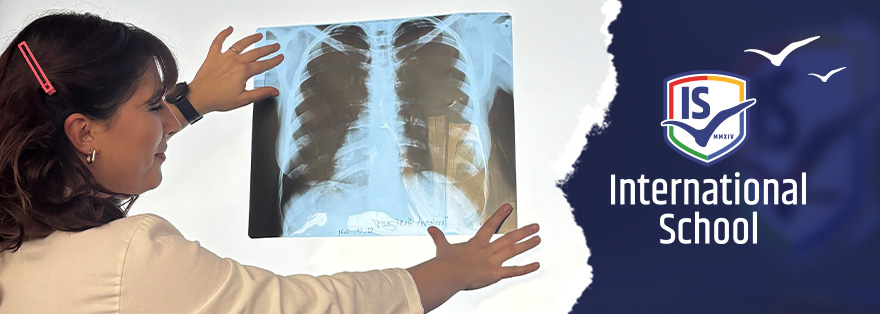
Students were introduced to X-ray and CT scan technologies, learning how each method works and how they are used to visualize internal organs. Through guided analysis, they compared the two imaging techniques, identified various anatomical structures, and examined differences between normal and abnormal results, developing both their analytical skills and medical literacy.
The highlight of the lesson was a heart and lung dissection, which provided students with a unique opportunity to observe real anatomical structures firsthand. This practical experience allowed them to explore organs they had previously encountered only through images and 3D models, deepening their understanding of structure, function, and spatial relationships within the human body.
Practical lessons like this play a vital role in Biology education, as they bridge the gap between theory and real-life application. By actively engaging with authentic materials, students develop critical thinking skills, scientific curiosity, and a deeper, more lasting understanding of complex biological concepts – an essential foundation for further studies in medicine, biology, and related fields.