

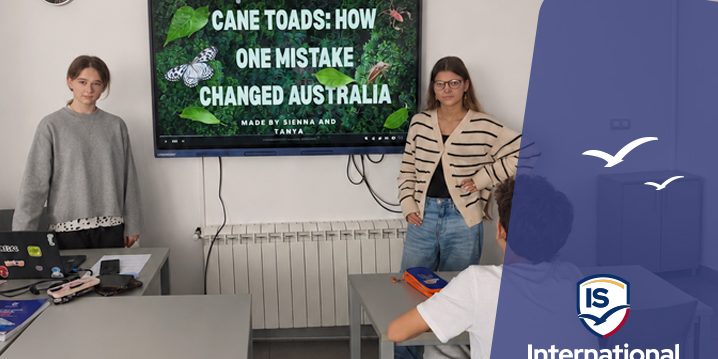
Through a Biology project, International School Year 8 students explored the delicate balance of ecosystems, the consequences of human intervention in nature and the importance of protecting biodiversity.
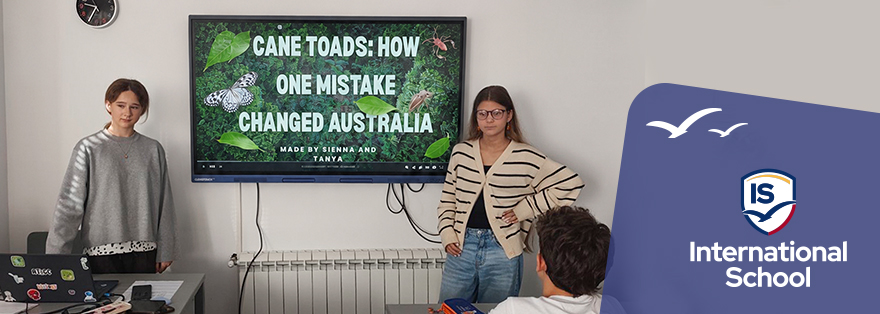
Can a single human decision change an entire ecosystem? This was the fascinating question explored by International School Year 8 students Sienna and Tanya during their Science lesson.
Their Biology project, entitled “Cane Toads: How One Mistake Changed Australia”, examined the introduction of cane toads to Australia and the environmental consequences of an intervention originally intended to solve an agricultural problem.
When a Solution Becomes a Problem
Through their presentation, students explained how cane toads were introduced to Australia in 1935 to control agricultural pests. However, instead of solving the problem, their introduction created a new ecological challenge.
The students explored the impact of this invasive species on native wildlife, food chains and biodiversity, highlighting how the introduction of a non-native species can disrupt the natural balance of an ecosystem.
From Scientific Research to Environmental Responsibility
Rather than focusing solely on the problem, Sienna and Tanya also considered potential solutions. As part of their project, they presented a three-step action plan highlighting the roles of citizens, schools and governments in protecting ecosystems.
This approach encouraged students to connect their scientific knowledge with real-world environmental challenges and recognise the importance of collective responsibility.
Developing Skills Beyond Science
By researching, preparing and presenting their findings to their classmates, students had the opportunity to develop critical thinking, research, teamwork and public speaking skills.
Project-based learning at International School encourages students to look beyond textbook knowledge, explore real-world issues and consider how their understanding of science can contribute to a more sustainable future.
Congratulations to Sienna and Tanya on connecting scientific knowledge with environmental awareness and demonstrating the importance of thinking critically about the world around us.